




Paul, Russian, follicular lymphoma (FL)
2024-9-24Paul (pseudonym), male, 42 years old, a patient from Russia, was diagnosed with follicular lymphoma(FL) in a local hospital and had achieved complete remission after multiple courses of chemotherapy. However, in the late follow-up, multiple lymph node enlargements in the abdominal cavity and inguinal area were observed. After ultrasound, CT, and puncture, the disease was diagnosed to be recurrent with a large tumour load.
Paul is a person who is very demanding on the quality of life and has a high level of awareness of his own disease. Out of the feeling of the disease treatment process and the expectation of a higher quality of life in the future, after comprehensive consideration and multiple researches, Paul contacted with Dr. Zhang Yajing of Beijing GoBroad Boren Hospital, and through the on-line video consultation and detailed communication, he made a firm determination of choosing CAR-T cell therapy.
Accompanied by his sister, Paul travelled a long way to Beijing GoBroad Boren Hospital for treatment. Considering that the tumour was recurrent after chemotherapy and the tumour load was high, in order to take into account the goals of tumour reduction and improvement of the immune microenvironment, and to further improve the efficacy of the treatment, Dr. Zhang Yajing tailored a combination of targeted drugs and low-dose local radiotherapy as a bridging plan for the patient before the CAR-T cell infusion; especially in the formulation of the radiotherapy plan, taking into account the fact that Paul is a middle-aged man with a very clear need for reproduction, a multidisciplinary consultation was organized to provide a customized radiotherapy plan for Paul. In order to take into account the safety and efficacy, a multidisciplinary consultation was organised, and an individualised radiotherapy plan was tailored for Paul. It was proved that Paul did not have any obvious treatment-related adverse reactions during the bridging treatment, and his tolerance and compliance were within the expected range, and he maintained good communication with the team at all times, and built up a deep trust.
Paul's CAR-T infusion process was relatively smooth, and the only treatment-related adverse reactions were low-grade fever and mild migraine. Even though Paul had a history of migraine attacks, we still planned the prevention and control strategy of neurological adverse reactions in advance to ensure the safety of the whole process of treatment, and the post-incubation expansion, function and activity of the CAR-T cells were monitored regularly, which also suggested a better activity and tumour killing effect. The expansion, function and activity of CAR-T cells after transfusion also showed better activity and tumour killing effect under regular monitoring, and the overall adverse reactions after transfusion were very smooth. The condition was good.
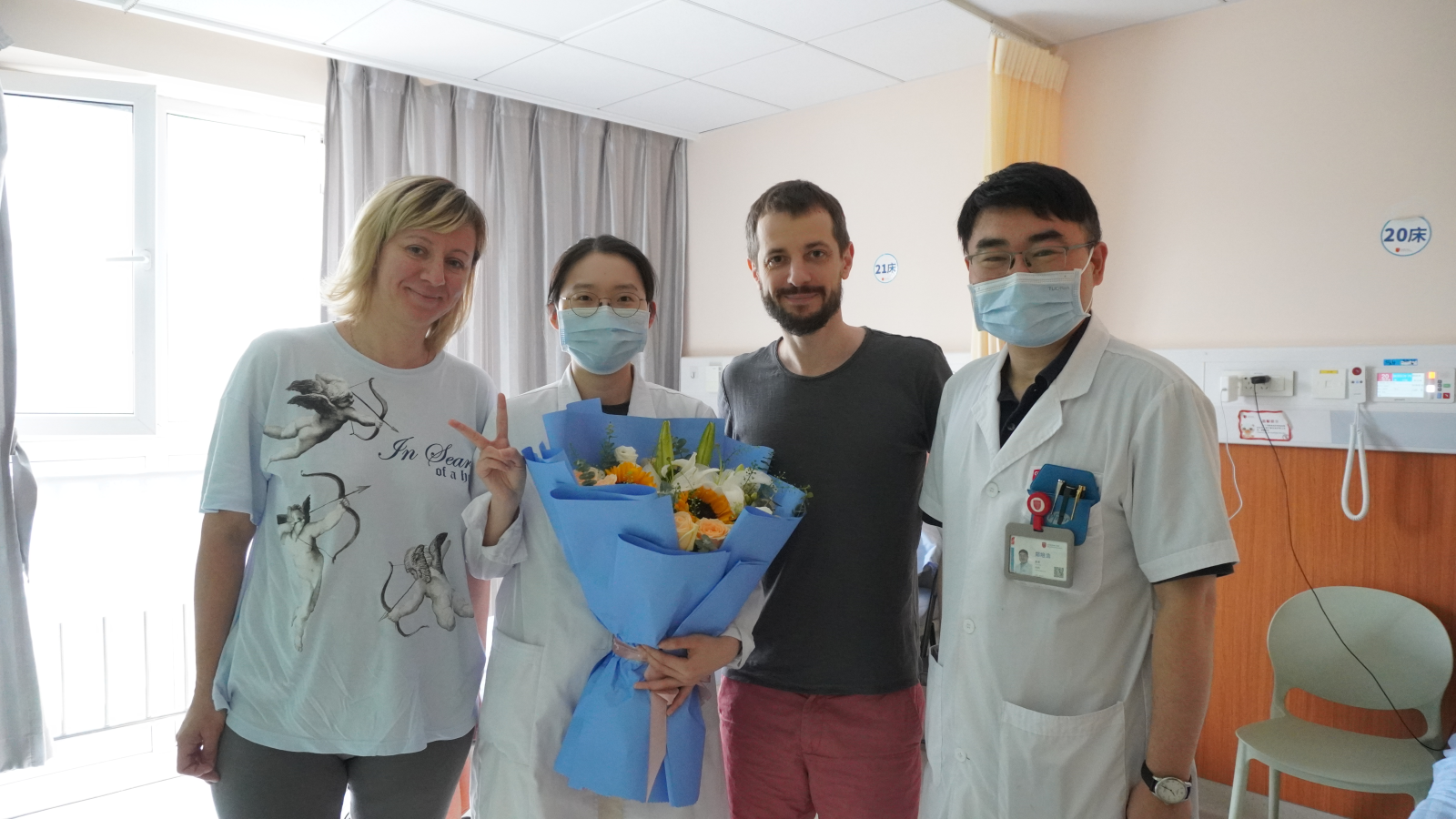
Recently, we received good news from Paul, who told us that he is getting better and better and is now running 5km every day, and he is very grateful for the care and help he received from the team during his treatment at GoBroad which made it easy for him to seek medical treatment in a foreign country without any difficulties or inconveniences. The team was very patient and helpful in communicating with him and helping him in his daily life.


