As cancer care enters a new era defined by precision medicine, immunotherapy, and multidisciplinary collaboration, the path from drug development to clinical practice is becoming increasingly rapid. A key challenge for modern healthcare systems is how to validate clinically meaningful innovations more efficiently and translate them into safe, standardized treatment options for patients.
Research-oriented hospitals are emerging as important platforms connecting clinical needs, scientific innovation, and translational development. Their value lies not simply in conducting more research, but in building a continuous cycle in which clinical questions drive research, research findings are tested in clinical practice, and validated strategies ultimately improve patient care.
This model is particularly relevant in small cell lung cancer (SCLC). Characterized by rapid progression, a high risk of relapse, and a strong tendency to metastasize to the brain, SCLC has historically offered very limited treatment options once patients progress after first-line therapy.
In recent years, however, the discovery of DLL3 and the development of novel treatment modalities—including T-cell engagers (TCEs), antibody-drug conjugates (ADCs), and CAR-T cell therapies—have opened new therapeutic possibilities. Among them, tarlatamab, the world’s first DLL3/CD3-targeting bispecific T-cell engager, has generated substantial clinical evidence through the DeLLphi program and is helping move SCLC treatment beyond a chemotherapy-dominated paradigm toward novel immune-targeted approaches.
Against this backdrop, Dr. Haifeng Qin, Director of the Department of Thoracic Oncology & Cancer Immunotherapy at Beijing GoBroad Hospital, GoBroad Healthcare Group, shares his perspectives on the evolving SCLC treatment landscape, the clinical value of tarlatamab, and the role of research-oriented hospitals in accelerating clinical translation.
Clinical Questions Should Drive Research
Q1: How do you define the core value of a research-oriented hospital?
Clinical medicine is fundamentally practice-based. Any new therapeutic approach must ultimately generate clinical evidence before it can become part of routine patient care. The greatest value of a research-oriented hospital is therefore its ability to bridge clinical practice and scientific research rather than allowing them to operate separately.
Clinicians encounter unresolved questions every day: What should be done after standard therapy fails? Can specific patient populations benefit from a new drug? How can treatment-related adverse events be managed more effectively?
A research-oriented hospital should transform these real-world clinical challenges into research questions, test them through clinical studies, and then bring the resulting evidence back into practice. Research should therefore evolve continuously around unmet clinical needs rather than exist independently of patient care.
At the same time, the pace of innovative drug development continues to accelerate. Capabilities in early-phase clinical research, investigator-initiated trials (IITs), multidisciplinary care, molecular diagnostics, and real-world follow-up all need to be integrated within a coordinated platform. Only then can innovative treatments be evaluated more efficiently while maintaining appropriate standards of safety and clinical governance.
Beijing GoBroad Hospital is among the institutions exploring this model by strengthening collaboration among clinicians, research platforms, and biopharmaceutical innovators, enabling selected emerging therapies to enter clinical research and real-world practice more efficiently.
DLL3 Opens a New Therapeutic Window
Q2: Why has SCLC remained one of the most difficult lung cancers to treat?
SCLC is highly aggressive, progresses rapidly, and has a strong tendency to metastasize, particularly to the brain.
Over the past several decades, non-small cell lung cancer has undergone two major therapeutic transformations with targeted therapy and immune checkpoint inhibitors. Progress in SCLC has been much slower. One important reason is the absence of well-established actionable driver alterations comparable to EGFR or ALK.
Immune checkpoint inhibitors have improved outcomes for some patients, but treatment options remain limited once SCLC becomes relapsed or refractory. Identifying new therapeutic targets has therefore remained a major research priority.
The discovery of DLL3 has been particularly important. DLL3 is highly expressed in a large proportion of SCLC tumor cells while showing relatively limited expression in normal tissues, providing a strong biological rationale for targeted intervention.
A number of DLL3-directed approaches are now being explored, including TCEs, ADCs, and CAR-T therapies. Emerging targets such as B7-H3 are also under active investigation.
From this perspective, SCLC is entering a new phase in which multiple innovative mechanisms are being developed in parallel.
Tarlatamab Is Moving SCLC Beyond Chemotherapy
Q3: How do you view the significance of tarlatamab in the evolving SCLC treatment landscape?
The significance of tarlatamab goes beyond simply adding another drug. It introduces a fundamentally different therapeutic mechanism from conventional chemotherapy.
Tarlatamab is a DLL3/CD3 bispecific T-cell engager. One arm binds DLL3 on tumor cells, while the other binds CD3 on T cells, bringing T cells into close proximity with tumor cells and activating an antitumor immune response.
This mechanism is helping expand SCLC treatment from traditional cytotoxic therapy toward immune-targeted treatment.
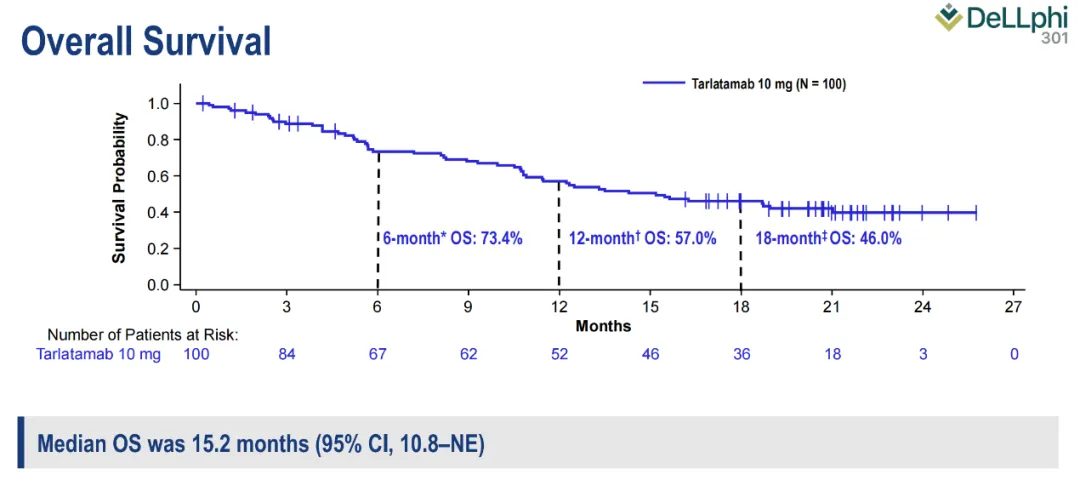
In the DeLLphi-301 study, tarlatamab achieved a confirmed objective response rate (ORR) of 40% in previously treated SCLC, with a median overall survival (mOS) of 15.2 months.
The China bridging study DeLLphi-307 reported an ORR of approximately 39%, broadly consistent with the global dataset.
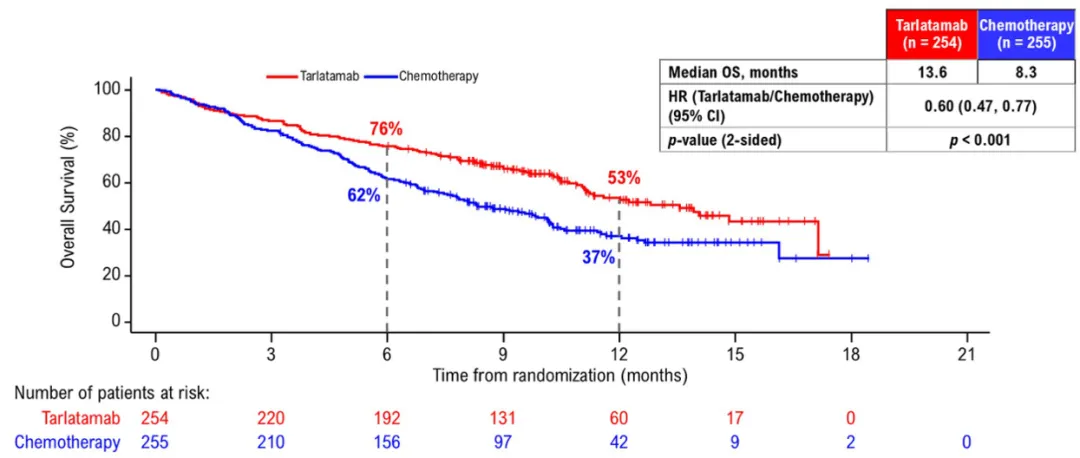
DeLLphi-304 subsequently moved tarlatamab into the second-line setting. Compared with standard chemotherapy, tarlatamab significantly prolonged overall survival, with median OS of 13.6 months versus 8.3 months.
Together, these studies suggest that later-line SCLC treatment is beginning to move beyond the traditional model of repeatedly switching chemotherapy regimens.
Another important finding is the intracranial antitumor activity observed with tarlatamab in patients with brain metastases. Because brain metastases are highly prevalent in SCLC, the ability of a systemic therapy to control intracranial disease is clinically meaningful. Findings from the DeLLphi program suggest that DLL3-directed treatment may broaden the therapeutic options available for this difficult-to-treat population.
Looking ahead, if ongoing studies in first-line therapy, maintenance treatment, and limited-stage SCLC continue to generate positive results, the potential role of tarlatamab may extend beyond relapsed disease and become part of broader disease management across the SCLC treatment continuum.
From “Having a Drug” to “Using It Well”
Q4: What new requirements do innovative therapies place on clinicians and treatment centers?
Approval of a new drug does not mean that clinical translation is complete.
In real-world practice, patients are often more complex than those enrolled in clinical trials. Some have received multiple prior lines of therapy, while others have impaired pulmonary function, interstitial lung disease, or other comorbidities. Many may also present with brain metastases or extensive multi-organ disease.
The clinical question therefore shifts from “Do we have a new treatment?” to “Which patients are suitable for it, when should it be used, and how should treatment-related risks be managed?”
For T-cell engagers, cytokine release syndrome (CRS) and immune effector cell-associated neurotoxicity syndrome (ICANS) are important safety considerations.
Their presence does not mean that the treatment cannot be used. Rather, they require treatment centers to establish structured management systems covering pretreatment risk assessment, monitoring during administration, early recognition and grading of adverse events, and timely multidisciplinary support from critical care, neurology, pharmacy, and other relevant specialties.
The team at Beijing GoBroad Hospital has accumulated real-world experience with tarlatamab. One key observation is that, with standardized risk assessment and management pathways in place, many patients can complete treatment safely and successfully.
The clinical adoption of innovative therapies therefore tests not only the physician’s understanding of a drug, but also the organizational capacity of the entire healthcare system.
From Short-Term Control to Long-Term Management
Q5: As new therapies emerge, how might the overall treatment philosophy for SCLC change?
Historically, when treating relapsed SCLC, the primary goals were to delay disease progression and relieve symptoms. In many cases, treatment remained focused on short-term disease control.
That is beginning to change.
New therapies, including tarlatamab, are enabling some patients to achieve deeper and more durable responses. As additional agents and combination strategies enter clinical practice, SCLC may evolve toward a more complex model of sequential treatment.
This means clinicians will need to move beyond selecting therapy primarily according to treatment line. Treatment decisions will increasingly need to consider molecular characteristics, prior therapies, brain metastases, disease burden, performance status, and the mechanisms of different therapeutic agents.
The longer-term goal is to transform SCLC from a disease with very limited options and rapid progression after relapse into one that can increasingly be managed over time using multiple treatment modalities.
It is still premature to describe SCLC as a chronic disease, and much more evidence will be required. Nevertheless, the direction of treatment is clearly shifting toward longer survival and a greater proportion of patients achieving durable clinical benefit.
Research-Oriented Hospitals as Clinical Translation Hubs
Q6: What role will research-oriented hospitals play in this new treatment era?
The pace of anticancer drug development will only continue to accelerate.
Basic research is identifying new targets, industry is developing new therapeutics, and clinicians are asking increasingly complex questions about combinations, sequencing, and patient selection. Without effective connections between these areas, valuable innovations may take a long time to reach clinical practice.
Research-oriented hospitals therefore function as clinical translation hubs.
On one side, they connect basic science, drug development, and biopharmaceutical innovation. On the other, they connect clinicians and patients. Through early-phase trials, IITs, real-world studies, and long-term follow-up, they can help determine more efficiently whether a therapeutic strategy has genuine clinical value.
Importantly, the goal of a research-oriented hospital is not simply to use new drugs faster. It must answer three fundamental questions: Which patients are most likely to benefit? How can a therapy be used to achieve the best possible outcomes? And how can treatment be delivered safely and consistently?
That is the real meaning of clinical translation.
A growing number of institutions in China, including Beijing GoBroad Hospital, are exploring research-oriented hospital models. As clinical research infrastructure, ethics systems, multidisciplinary collaboration, and translational medicine platforms continue to mature, this model may further shorten the distance between scientific innovation and clinical care.
Conclusion
SCLC is undergoing one of the most important treatment transitions seen in recent years.
The emergence of DLL3 and other novel targets, together with the development of TCEs, ADCs, and cellular therapies, is moving a disease long characterized by limited treatment options into an era of mechanism-driven therapeutic innovation. Tarlatamab, as a representative DLL3-directed T-cell engager, has demonstrated that innovative immunotherapy can deliver clinically meaningful survival benefits in relapsed SCLC and is now being explored in earlier stages of treatment.
Yet innovative drugs represent only one part of therapeutic progress.
The ability to identify truly valuable treatment strategies through high-quality clinical research, establish standardized adverse-event management pathways, and convert real-world clinical questions back into new research priorities will ultimately determine whether innovation translates into meaningful patient benefit.
From this perspective, the core value of a research-oriented hospital lies not in the number of innovative projects it conducts, but in its ability to build a sustainable cycle linking clinical needs, scientific research, clinical validation, and improvements in care.
As this model continues to mature, the treatment of difficult cancers such as SCLC may increasingly move beyond isolated therapeutic breakthroughs toward more systematic, continuous, and long-term disease management.